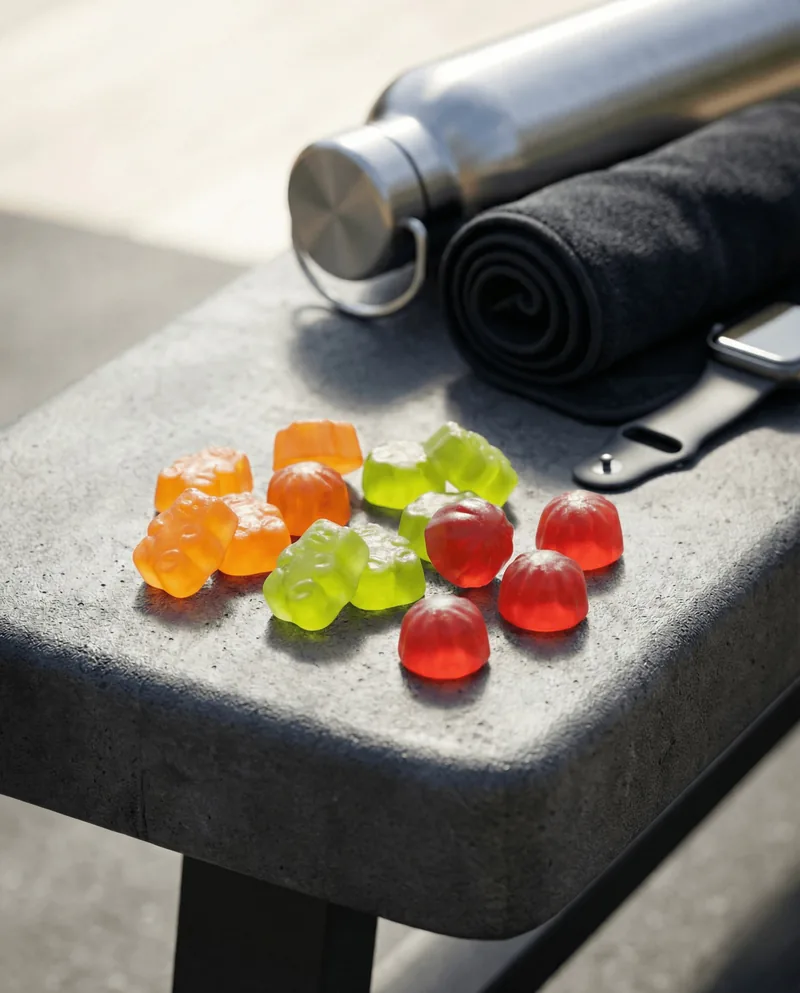
When reviewing gummy samples, brand owners should focus on texture, taste, appearance, and stability rather than efficacy. Gummy supplements require careful evaluation of chewability, moisture content, and ingredient compatibility. This guide outlines practical checks for assessing samples, from sensory attributes to packaging fit, helping you make informed decisions before scaling production. Understanding these factors ensures your final product meets market expectations without overstepping regulatory boundaries.
What to know first
Before reviewing samples, confirm your target market's regulatory requirements for gummy supplements, including permitted ingredients and labeling rules. Prepare a clear product brief specifying desired flavor, color, shape, and texture. Understand that gummy manufacturing involves precise control of temperature and humidity, which affects final consistency. Sample evaluation should focus on organoleptic properties and physical stability, not health outcomes.
Key considerations
Assess gummy samples for uniformity in size, shape, and color. Check for stickiness, melting point, and shelf-life stability under various conditions. Evaluate taste masking of active ingredients and overall palatability. Consider the gummy's ability to hold shape without deformation during packaging. These factors directly impact consumer acceptance and product integrity.
Personalisation and packaging
Under the Make it Yours program, you can customize gummy samples by adjusting flavor, color, sweetness level, and shape. Packaging options include pouches, bottles, or blister packs with your branding. Ensure the packaging material protects against moisture and light. Request samples with your chosen packaging to verify seal integrity and labeling placement.
Documentation scope
Request a certificate of analysis (COA) for each sample batch, covering identity, potency, and purity of ingredients. Review the specification sheet for physical parameters like weight variation and hardness. Note that final compliance documentation, including label claims and market-specific registrations, remains your responsibility. Use sample documentation to verify alignment with your product brief.
How to start with DAT Supply
Begin by submitting your product brief through the online form or contacting the sales team. Discuss your gummy concept, target market, and desired customization under Make it Yours. DAT Supply will develop a prototype sample for your review. Once approved, the project moves to scale-up and production. To get started, click 'Start order' or 'Order samples' to initiate the process.
Ingredient, dosage or concept changes beyond the catalogue are scoped as Custom Product R&D, with feasibility, production minimum and timeline confirmed per project.
Checking the sample against your brief, not just the product
The base checks — uniformity, stickiness, taste masking, shape retention — tell you whether a sample is well made. A separate, equally important check is whether it's well made against what you actually asked for. Go through your original product brief item by item against the physical sample: flavour, colour, shape, and any Make it Yours customisations you specified, noting anything that deviates rather than relying on a general impression that 'it looks right.'
This side-by-side approach matters most when a sample looks acceptable in isolation but drifts from the brief in a way that's easy to miss without the brief in front of you — a slightly different shade, a shape that's close but not the one selected. Track deviations explicitly so your feedback to the manufacturer is specific rather than general.
This is separate from, and complements, the sensory checks above: uniformity and taste masking tell you the sample is well executed on its own terms, while the brief comparison tells you it's the product you actually asked for.
Deciding whether you need a second sample round
Not every deviation needs a new round — some are within normal tolerance for a gummy format and worth accepting; others, particularly anything affecting taste masking, texture, or a customisation you specifically requested, are worth sending back. The decision point is whether the deviation would still be noticeable, or still a problem, once the product is in a consumer's hands rather than under review.
If you do request a second round, be specific about what changed from the brief rather than resubmitting a general 'try again' request — specific feedback gives the manufacturer what it needs to resolve the actual issue rather than introduce a new one.
As a rough rule, weigh cosmetic deviations (a shade or shape slightly off) against functional ones (taste masking that doesn't hold up, a texture that won't survive packaging and shipping) — the latter are worth a second round even when the former might not be.
If your brief covers more than gummies
This page is scoped to gummies specifically. If your project also covers sachets, functional jellies, oral strips, liquid drops, or pet soft chews, expect the same brief-vs-sample discipline to apply, but with review criteria suited to that format rather than gummy texture and chew.
The general sample process — how a project moves from brief to sample to production — is covered separately and applies across every format.
Documenting your review for the record
Keep dated notes, and photos where useful, for each sample round rather than relying on memory once you're several rounds in. A short record of what you checked, what deviated from the brief, and what feedback you sent back to the manufacturer makes it far easier to confirm that a later round actually resolved the issue, rather than just looking different.
This record is also useful beyond the current launch: if you revisit the formulation later, or add a related product to the same line, having a clear history of what was accepted and why saves you re-litigating decisions you already made.
It's a small habit that costs little time per round but pays off disproportionately the moment a formulation question resurfaces months after the samples themselves are gone.
Frequently asked questions — What to check when reviewing gummy samples
How many sample rounds should I expect before approving?
There's no fixed number — it depends on how closely the first round matches your brief. Confirm the expected review cadence with your manufacturer as part of your project timeline rather than assuming a set count.
Should I request an allergen-free confirmation at the sample stage?
If allergen status matters for your target market, raise it during your brief so it's confirmed before or alongside the first sample, not after approval.
Can I request packaging variations at the sample stage without committing to full production?
Yes — packaging fit and seal integrity are typically checked as part of sample review, ahead of any production commitment.
Do I need external testing before approving gummy samples?
Not necessarily — standard sample documentation covers identity, potency, and purity; external testing is a separate, brand-owner-initiated step covered elsewhere in this resource library.
Related resources
- Resource
A supplement order-minimum and cost planning guide
Plan your supplement launch with this guide on order minimums and costs for private-label brand owners. Learn about Make it Yours, samples,
Read more → - Resource
Apple cider vinegar supplements: a private-label overview
Apple cider vinegar supplements: a private-label overview — a practical private-label guide for supplement brand owners. Plan formats, categ
Read more → - Resource
Ashwagandha supplements: a private-label overview
Ashwagandha supplements: a private-label overview — a practical private-label guide for supplement brand owners. Plan formats, categories an
Read more → - Resource
Biotin supplements: a private-label overview
Biotin supplements: a private-label overview — a practical private-label guide for supplement brand owners. Plan formats, categories and doc
Read more → - Resource
Collagen supplements: a private-label overview
Collagen supplements: a private-label overview — a practical private-label guide for supplement brand owners. Plan formats, categories and d
Read more → - Resource
Creatine supplements: a private-label overview
Creatine supplements: a private-label overview — a practical private-label guide for supplement brand owners. Plan formats, categories and d
Read more → - Resource
Doypack supplement packaging explained
Doypack supplement packaging explained — a practical private-label guide for supplement brand owners. Plan formats, categories and documenta
Read more → - Resource
Electrolyte supplements: a private-label overview
Electrolyte supplements: a private-label overview — a practical private-label guide for supplement brand owners. Plan formats, categories an
Read more →
Where to next?
Browse the reviewed catalogue, request samples, or start an order when you're ready — the DAT Supply portal routes your brief through the right review step.