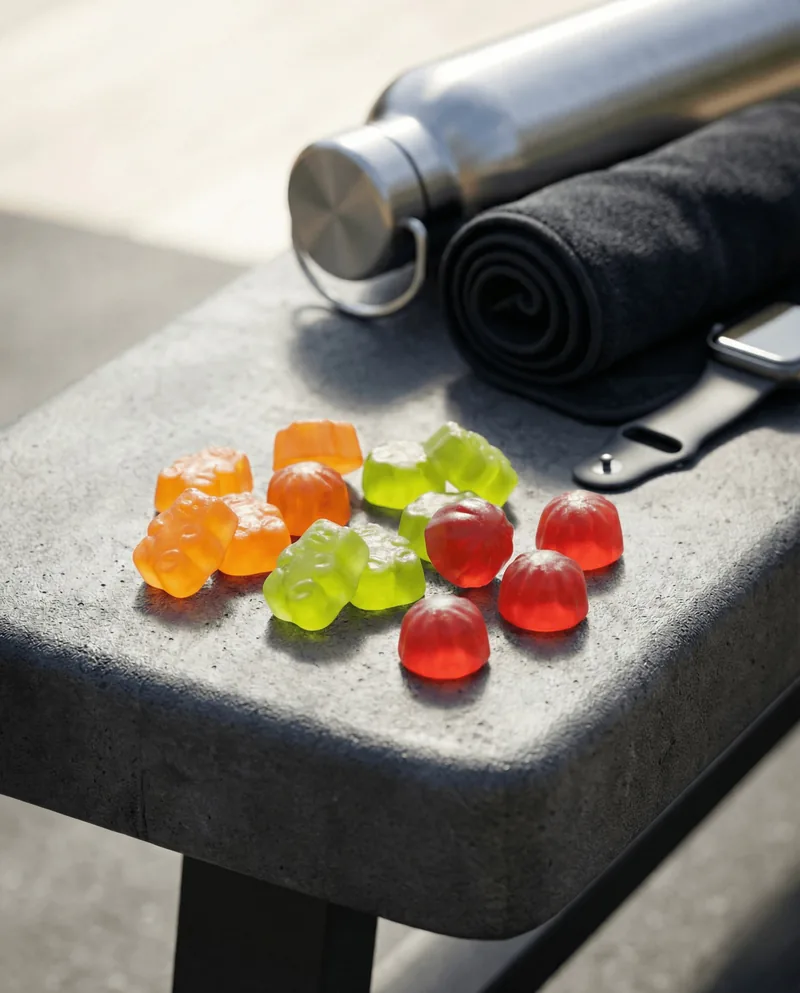
Private-label supplement samples allow brand owners to evaluate product formulations, packaging, and quality before committing to full-scale production. Working with a multi-format contract manufacturer, you can request samples tailored to your specifications—from capsule blends to powder mixes—under a personalized program. This process helps you refine your product concept, verify that the finished goods align with your brand vision, and ensure compliance with your target market's regulations. Understanding how sampling works streamlines your path from concept to shelf, reducing risk and accelerating your go-to-market timeline.
What to know first
Before requesting samples, define your product concept: format (capsule, powder, gummy, etc.), target dosage, and any functional ingredients you wish to include. Note that your brand is responsible for final label claims and market compliance. Samples are typically produced in small batches to match your desired formulation and packaging, allowing you to test taste, texture, and stability. Be prepared to provide a brief that outlines your requirements—this helps the manufacturer create a sample that closely mirrors your intended final product.
Key considerations
Sample turnaround depends on formulation complexity and ingredient availability. While specific lead times vary, expect that custom formulations may take longer than existing stock formulas. Samples are generally non-refundable and may have a minimum order quantity. Ensure you have clear communication with your manufacturer about any allergens, certifications, or regulatory requirements your target market demands. Remember, the sample is a prototype—final production may involve adjustments based on your feedback.
Personalisation and packaging
Under the Make it Yours program, you can personalize your supplement samples with custom blends, flavors, and packaging options. This includes selecting bottle sizes, label designs, and closure types. Your manufacturer will provide a sample of the packaging for your approval before production. Personalisation extends to branding elements like logos and color schemes, ensuring the sample represents your brand identity. This step is crucial for validating the look and feel of your product on the shelf.
Documentation scope
When requesting samples, you will receive documentation including a certificate of analysis (COA) for the batch, which confirms ingredient identity and potency. However, final compliance documentation for your market—such as label reviews or regulatory filings—is your responsibility. Your manufacturer may provide a formulation sheet and stability data if available. Always review the documentation to ensure it meets your internal quality standards and any third-party certification requirements you pursue.
How to start with DAT Supply
To begin, browse our private label catalog or contact our team with your product concept. We will guide you through the brief process, helping you refine your formulation and packaging preferences. Once the brief is finalized, we produce a sample for your evaluation. You can then provide feedback, request adjustments, or proceed to production. Start by ordering samples or reaching out for a consultation—no commitment required.
Ingredient, dosage or concept changes beyond the catalogue are scoped as Custom Product R&D, with feasibility, production minimum and timeline confirmed per project.
What sampling looks like across formats
What a manufacturer checks during sampling differs by format, because the questions worth answering differ by format. A gummy sample is judged on texture, bite and flavour release; a sachet sample is judged on powder flow, dissolution and pouch seal integrity; a functional jelly sample is judged on set firmness and mouthfeel; an oral strip sample is judged on dissolve time and residual taste; a liquid drop sample is judged on viscosity, clarity and dosing-dropper accuracy; a pet soft chew sample is judged on palatability and chew texture rather than flavour alone.
Because the evaluation criteria differ, it helps to name your format early in the brief rather than leaving it open — each of the six commercially available formats (gummies, sachets, functional jellies, oral strips, liquid drops and pet soft chews) is sampled against a different set of questions, and a brief that names the format from the outset avoids a first sample round that answers the wrong ones.
When a second sampling round makes sense
Not every brief needs more than one round of samples. A project built on an existing catalogue formula, with only flavour, colour or packaging changes, typically clears review in a single round because the underlying formulation is already validated. A project that changes the active blend, requests a new flavour profile from scratch, or combines actives that haven't been paired in the catalogue before is more likely to need a second round after the manufacturer adjusts based on your first-round feedback.
Treat the first sample as a working draft rather than a final judgment: note specific, actionable feedback (too sweet, too soft, dissolves too slowly) rather than a pass/fail verdict, since precise feedback is what lets the manufacturer's second iteration actually close the gap.
What changes — and what doesn't — once a sample is approved
Once you sign off on a sample, the formulation, flavour and packaging spec it represents is locked as the reference the production batch is measured against — this is the point where your brief stops being a moving target. From here, the project moves onto the manufacturer's standard timeline for a private-label order, which runs 8–12 weeks regardless of format.
What doesn't change automatically is documentation: the certificate of analysis and formulation sheet you received for the sample batch cover that batch specifically, and you should expect a fresh certificate of analysis tied to the production batch once it completes. If your target market requires label review or regulatory notification, that step still sits with you as the brand owner and is worth starting in parallel with production rather than after it.
What a sample confirms — and what it doesn't
A sample confirms flavour, texture, appearance and, generally, how the formulation performs at a single point in time. It does not, on its own, confirm full shelf-life — stability testing that projects how a formulation holds up over its intended shelf life runs on its own schedule, separate from the sample-approval cycle, and is worth asking about explicitly if long-dated stability matters to your launch plan.
Treat sample approval as confirmation that the formulation is right, not as a substitute for the stability and quality documentation that covers the product over time — the two answer different questions, and conflating them is a common source of surprise later in a project.
Frequently asked questions — How private-label supplement samples work
Do I need a separate sample for every format I'm considering?
Yes — because the evaluation criteria (texture, dissolution, palatability) are format-specific, a sample produced in one format doesn't tell you how the same active blend will perform in another. If you're comparing formats, plan for one sample per format under consideration.
Is the sample formulation identical to what ships in production?
It's the reference the production batch is measured against, but production runs are batch-tested independently — expect a fresh certificate of analysis for the production batch rather than assuming the sample's paperwork carries over automatically.
How many rounds of sampling should I plan for?
Catalogue-based projects with only flavour, colour or packaging changes often clear in one round; projects that adjust the active blend or request a new flavour profile are more likely to need a second round after feedback.
Related resources
- Resource
A supplement order-minimum and cost planning guide
Plan your supplement launch with this guide on order minimums and costs for private-label brand owners. Learn about Make it Yours, samples,
Read more → - Resource
Apple cider vinegar supplements: a private-label overview
Apple cider vinegar supplements: a private-label overview — a practical private-label guide for supplement brand owners. Plan formats, categ
Read more → - Resource
Ashwagandha supplements: a private-label overview
Ashwagandha supplements: a private-label overview — a practical private-label guide for supplement brand owners. Plan formats, categories an
Read more → - Resource
Biotin supplements: a private-label overview
Biotin supplements: a private-label overview — a practical private-label guide for supplement brand owners. Plan formats, categories and doc
Read more → - Resource
Collagen supplements: a private-label overview
Collagen supplements: a private-label overview — a practical private-label guide for supplement brand owners. Plan formats, categories and d
Read more → - Resource
Creatine supplements: a private-label overview
Creatine supplements: a private-label overview — a practical private-label guide for supplement brand owners. Plan formats, categories and d
Read more → - Resource
Doypack supplement packaging explained
Doypack supplement packaging explained — a practical private-label guide for supplement brand owners. Plan formats, categories and documenta
Read more → - Resource
Electrolyte supplements: a private-label overview
Electrolyte supplements: a private-label overview — a practical private-label guide for supplement brand owners. Plan formats, categories an
Read more →
Where to next?
Browse the reviewed catalogue, request samples, or start an order when you're ready — the DAT Supply portal routes your brief through the right review step.