Before requesting supplement samples, brand owners should understand the approval process to ensure efficient collaboration with a private-label manufacturer. This checklist outlines the steps from initial brief to sample sign-off, focusing on preparation, customization options, and documentation requirements. By following these guidelines, you can streamline the sampling phase and move confidently toward production.
What to know first
The sample approval process begins with a clear product brief. Brand owners should define the supplement format (capsule, powder, liquid, etc.), target dosage form, and any desired functional ingredients. It's important to note that final product claims and labeling compliance rest with the brand owner, not the manufacturer. Samples are produced based on the agreed formulation and specifications, and any changes after approval may incur additional costs or delays.
Key considerations
When preparing for sample approval, consider the intended market, regulatory environment, and target audience. The manufacturer can provide guidance on ingredient sourcing and formulation stability, but the brand owner must ensure the product meets local regulations. Also, think about shelf life, packaging compatibility, and any allergen or dietary restrictions. Clear communication of these factors early on helps avoid revisions later.
Personalisation and packaging
Under the Make it Yours program, brand owners can customize their supplements with unique blends, flavor profiles, and packaging designs. This includes selecting bottle size, label artwork, and closure options. Samples will reflect these choices, so finalize your packaging specifications before requesting samples. The manufacturer can produce small batches for evaluation, allowing you to test market appeal and functionality.
Documentation scope
During the sample approval process, brand owners should request and review relevant documentation, such as certificates of analysis (COAs) for raw materials and finished products, formulation sheets, and stability data. However, the manufacturer does not guarantee specific testing outcomes or compliance with all global regulations. It is the brand owner's responsibility to verify that the documentation meets their market's requirements.
How to start with DAT Supply
To begin the sample approval process, contact DAT Supply with your product brief and any customization preferences. Their team will guide you through formulation development and provide a timeline for sample production. Once samples are ready, you can evaluate them and provide feedback. After approval, the project moves to full-scale production. Start by browsing private label options or ordering samples to test the quality.
Ingredient, dosage or concept changes beyond the catalogue are scoped as Custom Product R&D, with feasibility, production minimum and timeline confirmed per project.
What the approval checklist covers per format
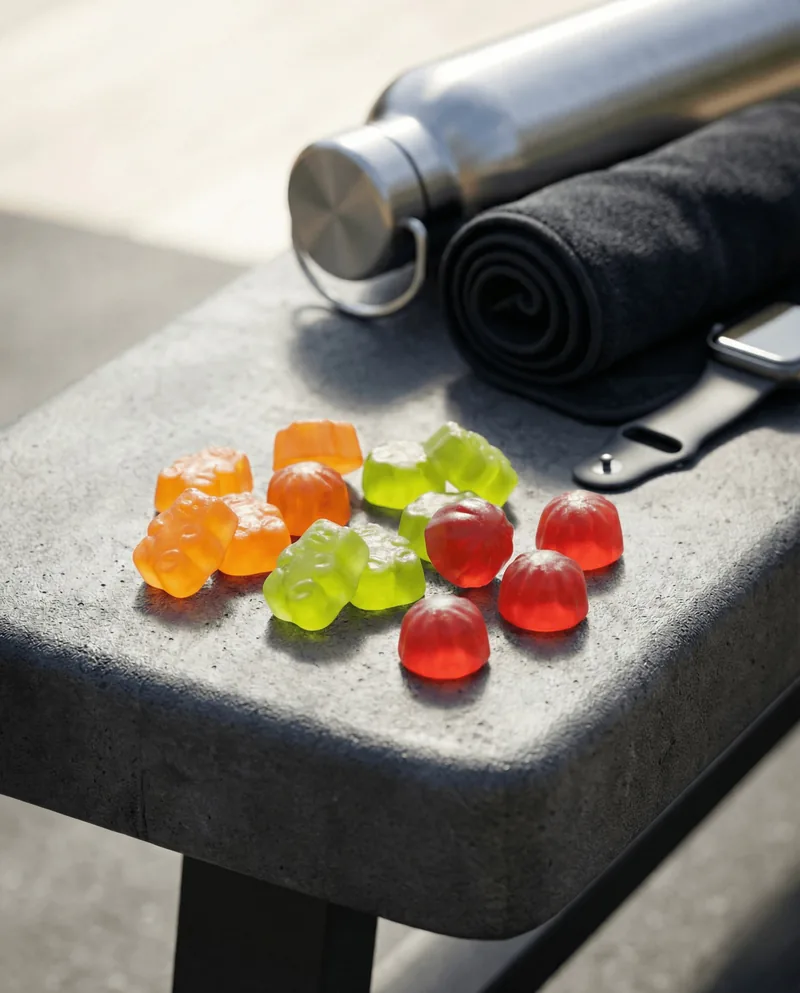
The considerations above apply across any format, but what a brand owner actually checks on arrival differs by format. For a gummy sample, that's texture, shape consistency, flavour and any coating. For a powder sachet, it's pouch seal integrity, fill consistency and label placement. For a functional jelly, it's set firmness and stick-shape consistency. For an oral strip, it's dissolve behaviour, strip integrity and flavour carry. For liquid drops, it's dropper function, fill level and clarity. For pet soft chews, it's chew texture and shape consistency batch to batch.
Running through the relevant checklist for the format in front of you — rather than a generic pass/fail impression — is what turns sample review into an approval a brand owner can stand behind later, since the same physical attributes are what a production-run batch will be checked against before it ships.
What happens when a sample doesn't pass approval
Not every first sample passes review, and that's a normal part of the process described above rather than a sign something has gone wrong. When a sample doesn't meet the brief, the manufacturer produces a revised sample against the same specification, adjusting the specific attribute flagged — flavour intensity, fill weight, dissolve time — without reopening the parts of the brief that already passed.
This matters for timeline planning: the manufacturer's standard 8–12 week lead time is measured from approved samples, not from the first sample submitted. A second sample round shifts when that window starts rather than shortening it, so brand owners with a fixed launch date should build a buffer for at least one revision cycle into their planning rather than assuming the first sample will be the last.
Documentation to request alongside sample approval
Sample approval should be logged against a written specification reference, not just a verbal or email sign-off — recording exactly which specification version the approved sample matches makes it far easier to catch drift if a later production batch looks or performs differently. This is the practical link between sample approval and the product specification document described in the documentation scope above.
It's also worth being clear on what sample approval is not: it is not the same as a batch release confirmation, which is a separate document issued after a full production run completes, not at the sampling stage. Brand owners occasionally expect one to stand in for the other; keeping the two apart avoids confusion about what's actually been confirmed at each stage of the project.
Approving samples for a multi-format range
A range that spans more than one sellable format runs a separate sample-approval cycle per format, since each format has its own physical attributes to check and its own specification to check them against. Approving the gummy sample in a range does not carry over to approving the sachet or liquid-drop sample in the same range — each format's checklist above needs to be worked through on its own.
For a brand managing several formats at once, it helps to track approval status per format-and-SKU rather than treating the range as approved once the first format clears review. A simple status log — which format, which SKU, approved or pending revision — keeps the production schedule for each format visible rather than assuming the whole range moves together.
Frequently asked questions — The supplement sample approval checklist
Does the sample-approval checklist differ by format?
Yes. The physical attributes worth checking on a gummy sample (texture, coating) differ from those on a liquid-drop sample (dropper function, clarity) or an oral strip (dissolve behaviour), even though the overall approval process is the same across formats.
If a sample fails approval, does that change the manufacturer's 8-12 week lead time?
No, but it does shift when that window begins. The 8–12 week lead time is measured from approved samples, so a revision round delays the start of the window rather than compressing or extending the window itself.
Should sample approval be documented in writing?
Yes. Recording the approval against the specific specification version the sample matches gives both parties a clear reference point if a later production batch needs to be checked against it.
Is a batch release confirmation the same thing as sample approval?
No. Sample approval happens before production starts; a batch release confirmation is a separate document issued after a full production run is complete.
Related resources
- Resource
A supplement order-minimum and cost planning guide
Plan your supplement launch with this guide on order minimums and costs for private-label brand owners. Learn about Make it Yours, samples,
Read more → - Resource
Apple cider vinegar supplements: a private-label overview
Apple cider vinegar supplements: a private-label overview — a practical private-label guide for supplement brand owners. Plan formats, categ
Read more → - Resource
Ashwagandha supplements: a private-label overview
Ashwagandha supplements: a private-label overview — a practical private-label guide for supplement brand owners. Plan formats, categories an
Read more → - Resource
Biotin supplements: a private-label overview
Biotin supplements: a private-label overview — a practical private-label guide for supplement brand owners. Plan formats, categories and doc
Read more → - Resource
Collagen supplements: a private-label overview
Collagen supplements: a private-label overview — a practical private-label guide for supplement brand owners. Plan formats, categories and d
Read more → - Resource
Creatine supplements: a private-label overview
Creatine supplements: a private-label overview — a practical private-label guide for supplement brand owners. Plan formats, categories and d
Read more → - Resource
Doypack supplement packaging explained
Doypack supplement packaging explained — a practical private-label guide for supplement brand owners. Plan formats, categories and documenta
Read more → - Resource
Electrolyte supplements: a private-label overview
Electrolyte supplements: a private-label overview — a practical private-label guide for supplement brand owners. Plan formats, categories an
Read more →
Where to next?
Browse the reviewed catalogue, request samples, or start an order when you're ready — the DAT Supply portal routes your brief through the right review step.