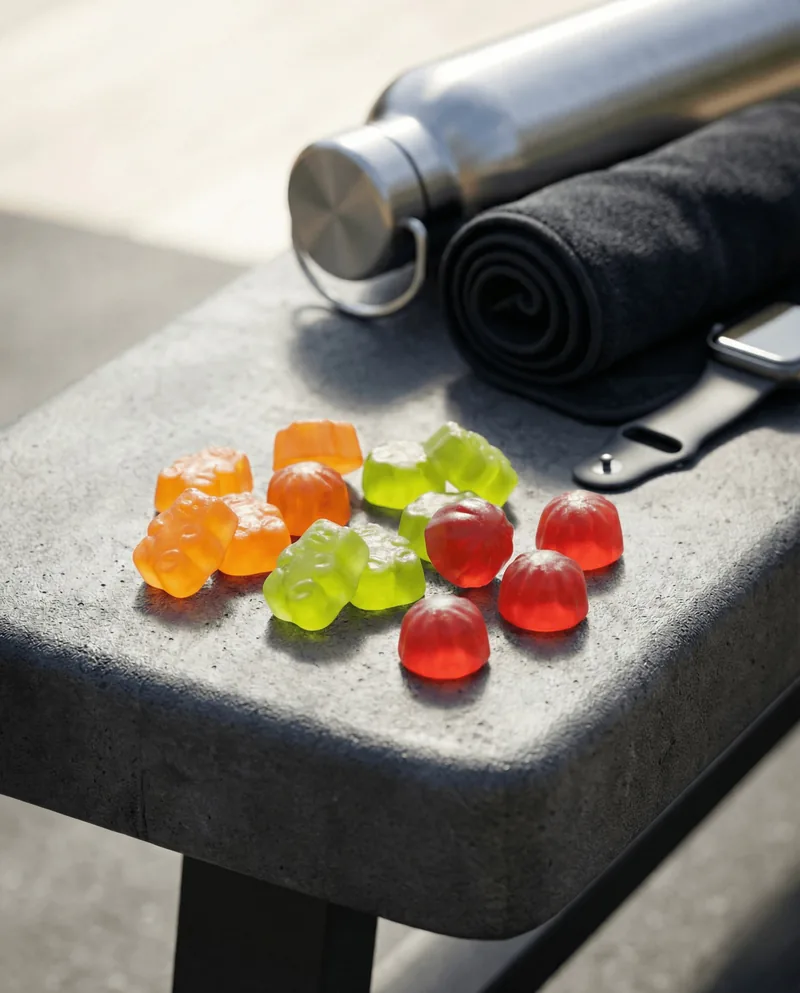
This guide equips brand owners with a structured walkthrough of launching a sports nutrition range through private-label manufacturing. It covers what to prepare before engaging a partner, how the Make it Yours personalisation process works, and how a project routes from brief to samples to production — without prescribing dosages or making product claims. The brand owner remains responsible for final claims, on-pack labelling and market compliance in each destination market. By the end, you'll know how to order samples, review MOQ and lead times, and [start your order](https://portal.dat.supply/register).
What is sports nutrition private-label manufacturing?
Sports nutrition private-label manufacturing allows brand owners to bring a ready-to-sell range to market under their own brand without developing formulations from scratch. The manufacturer provides pre-developed, compliant formulations that can be customised through the Make it Yours programme — adjusting flavour, colour, active ingredient levels, and packaging. This model significantly reduces time-to-market and R&D investment while still enabling differentiation. For brand owners targeting athletes, fitness enthusiasts, or active lifestyle consumers, private-label sports nutrition offers a fast track to shelf presence. The manufacturer handles production, quality control, and regulatory documentation, while the brand owner retains control over branding, claims (subject to compliance), and distribution. Key formats in sports nutrition include gummies, sachets, jelly sticks, and oral strips — each suited to different consumption occasions and consumer preferences. Browse the private label catalogue to explore available bases.
How to prepare for your sports nutrition project
Before engaging a private-label partner, brand owners should define their target market, regulatory region, and product concept. Start by identifying the specific sports nutrition category — pre-workout, recovery, hydration, or daily wellness — and the desired format. Consider your brand's positioning: premium, value, or niche. Prepare a brief that includes target dosage (e.g., caffeine per serving), flavour profile, packaging type (pouches, bottles, boxes), and any certification requirements (e.g., organic, non-GMO, vegan). Having a clear brief accelerates the quotation and sampling process. The manufacturer will then review MOQ and lead times based on your requirements. It's also wise to review documentation scope early to understand what regulatory paperwork you'll need for your destination markets. The brand owner remains responsible for final claims and label compliance, so consult local regulations before finalising.
The Make it Yours personalisation process
DAT Supply's Make it Yours programme offers a structured personalisation path that goes beyond simple white-labeling. Brand owners can choose from a library of sports nutrition bases — each with established safety and stability data — and then customise up to three active ingredients, adjust nutrient levels within safe ranges, select flavours and colours, and design custom packaging. The process begins with a consultation to define your personalisation scope, followed by a formulation review by the manufacturer's R&D team. Once approved, a sample batch is produced for your evaluation. This approach avoids the cost and time of full custom formulation while still delivering a differentiated product. For example, a brand could take a base electrolyte gummy and boost magnesium content, add a tart cherry flavour, and package in a resealable pouch. Order samples to test your personalised concept before committing to full production.
From brief to production: the project route
The project route from brief to production follows a clear, phased workflow. Phase 1: Brief and quotation — submit your product brief, receive a commercial proposal with MOQ, lead time, and pricing. Phase 2: Personalisation and sampling — refine your formulation and packaging through Make it Yours, then receive and approve samples. Phase 3: Regulatory and documentation — the manufacturer provides technical data sheets, stability reports, and certificates of analysis; the brand owner finalises labels and claims. Phase 4: Production run — manufacturing, quality control, and packing. Phase 5: Dispatch and logistics — goods are shipped to your warehouse or fulfilment centre. Throughout, a dedicated project manager coordinates timelines and updates. For a detailed checklist, see the documentation route. The brand owner remains responsible for final claims and label compliance in each market.
Key considerations for brand owners
When launching a sports nutrition range, brand owners should consider market trends, regulatory nuances, and supply chain reliability. Sports nutrition consumers increasingly seek clean labels, transparent sourcing, and functional benefits like energy, focus, or recovery. Formats like gummies and sachets are growing due to convenience and portability. Regulatory compliance varies by region — for example, the EU has strict novel food and health claim rules, while the US allows structure-function claims with disclaimers. Work with a manufacturer experienced in your target markets; EU regulatory framework resources can help. Also, factor in MOQ and lead times — review MOQ and lead times early to align with your launch calendar. Finally, always test samples thoroughly and ensure your branding and claims are legally vetted. The brand owner remains responsible for final claims, on-pack labelling and market compliance.
Ingredient, dosage or concept changes beyond the catalogue are scoped as Custom Product R&D, with feasibility, production minimum and timeline confirmed per project.
Matching sports-nutrition formats to training occasions
The four sellable lanes behind a DAT Supply sports-nutrition range — gummies, powder sachets, functional jellies and oral strips — line up differently against training occasions than a simple format list suggests. A sachet suits a single pre- or post-workout serving a consumer carries loose or mixes on the move, without committing shelf space to a full container. An oral strip dissolves without water, which fits a gym-bag or between-sets use case a gummy or jelly can't match.
Functional jellies and gummies both suit a daily-habit occasion rather than a single training moment. A jelly reads closer to a food format, which fits a recovery or hydration SKU well, while a gummy remains the widely recognised daily format for a general wellness SKU sitting alongside a training-specific one in the same range. Every sports-nutrition SKU in the catalogue sits within these four lanes: the category's pre-workout, recovery and electrolyte powder concepts run through the powder-sachet lane rather than a separate powders hub, while capsule and tablet briefs sit outside the sellable set entirely.
Sequencing a range across training occasions
The phased brief-to-production route described above applies per SKU, and a sports-nutrition range typically covers more than one training occasion — pre-workout, recovery, hydration, daily wellness — rather than one. A common sequence starts with the occasion the target consumer reaches for most often, usually a recovery or daily-wellness gummy, then adds a second SKU built for a more specific moment, such as a pre-workout sachet or a fast-dissolve oral strip, once the first has cleared sampling.
Because Make it Yours personalisation is scoped to each format's base recipe, moving from one training occasion to the next inside the same range means a fresh personalisation pass rather than a simple repeat of the first SKU's choices — active-ingredient adjustments, flavour and packaging are each reassessed against the new format's base. Brand owners sequencing this way should treat each training-occasion SKU as its own brief even when the range shares one overall positioning.
Where performance-claims scrutiny lands in the documentation handoff
Sports nutrition draws more scrutiny on structure-function and performance-related claims than most categories, and that scrutiny lands squarely on the documentation handoff described above. The manufacturer's technical data sheets and certificates of analysis describe what a SKU is and what it tested as — they do not draft or approve the performance claims a brand puts on-pack, which remains the brand owner's responsibility to substantiate for each destination market.
In practice, that means treating the documentation handoff as a claims-review checkpoint rather than a formality: before finalising label copy, cross-check every performance-related claim against what the technical data sheet and certificate of analysis actually support for that SKU's format and market. Doing this per format matters, since a claim substantiated for one format's dose form and packaging doesn't automatically transfer to another format carrying the same active-ingredient direction.
This checkpoint is worth building into the project timeline rather than leaving to the final review before launch. A brand owner who reviews the technical data sheet and certificate of analysis against draft label copy as soon as each document arrives — instead of waiting until every SKU in the range is documented — catches claim mismatches early enough to revise copy without holding up the rest of the range's launch schedule.
Frequently asked questions — The sports nutrition private-label guide
Which sports-nutrition formats does the catalogue not cover?
Capsules and tablets, commonly seen elsewhere in sports nutrition, sit outside DAT Supply's sellable format list. The catalogue's sports-nutrition SKUs are built in four lanes — gummies, powder sachets, functional jellies and oral strips — so powder concepts are covered by the powder-sachet lane rather than falling outside the catalogue.
Can one sports-nutrition range use different formats for different training occasions?
Yes — this is the common pattern. A range can pair a daily-wellness gummy with a pre-workout sachet or a fast-dissolve oral strip, with each SKU carrying its own personalisation pass and format-specific brief.
Who reviews performance-related claims before a sports-nutrition SKU launches?
The brand owner. The manufacturer supplies technical data sheets and certificates of analysis describing the product; the brand owner is responsible for checking that any performance claim on-pack is substantiated by that documentation for the target market.
Does launching multiple formats at once extend the standard lead time?
No single combined timeline applies. Each format brief runs its own production cycle within the locked 8–12 week window; formats launched together each stay within that window independently rather than sharing or extending it.
Related resources
- Resource
A supplement order-minimum and cost planning guide
Plan your supplement launch with this guide on order minimums and costs for private-label brand owners. Learn about Make it Yours, samples,
Read more → - Resource
Apple cider vinegar supplements: a private-label overview
Apple cider vinegar supplements: a private-label overview — a practical private-label guide for supplement brand owners. Plan formats, categ
Read more → - Resource
Ashwagandha supplements: a private-label overview
Ashwagandha supplements: a private-label overview — a practical private-label guide for supplement brand owners. Plan formats, categories an
Read more → - Resource
Biotin supplements: a private-label overview
Biotin supplements: a private-label overview — a practical private-label guide for supplement brand owners. Plan formats, categories and doc
Read more → - Resource
Collagen supplements: a private-label overview
Collagen supplements: a private-label overview — a practical private-label guide for supplement brand owners. Plan formats, categories and d
Read more → - Resource
Creatine supplements: a private-label overview
Creatine supplements: a private-label overview — a practical private-label guide for supplement brand owners. Plan formats, categories and d
Read more → - Resource
Doypack supplement packaging explained
Doypack supplement packaging explained — a practical private-label guide for supplement brand owners. Plan formats, categories and documenta
Read more → - Resource
Electrolyte supplements: a private-label overview
Electrolyte supplements: a private-label overview — a practical private-label guide for supplement brand owners. Plan formats, categories an
Read more →
Where to next?
Browse the reviewed catalogue, request samples, or start an order when you're ready — the DAT Supply portal routes your brief through the right review step.