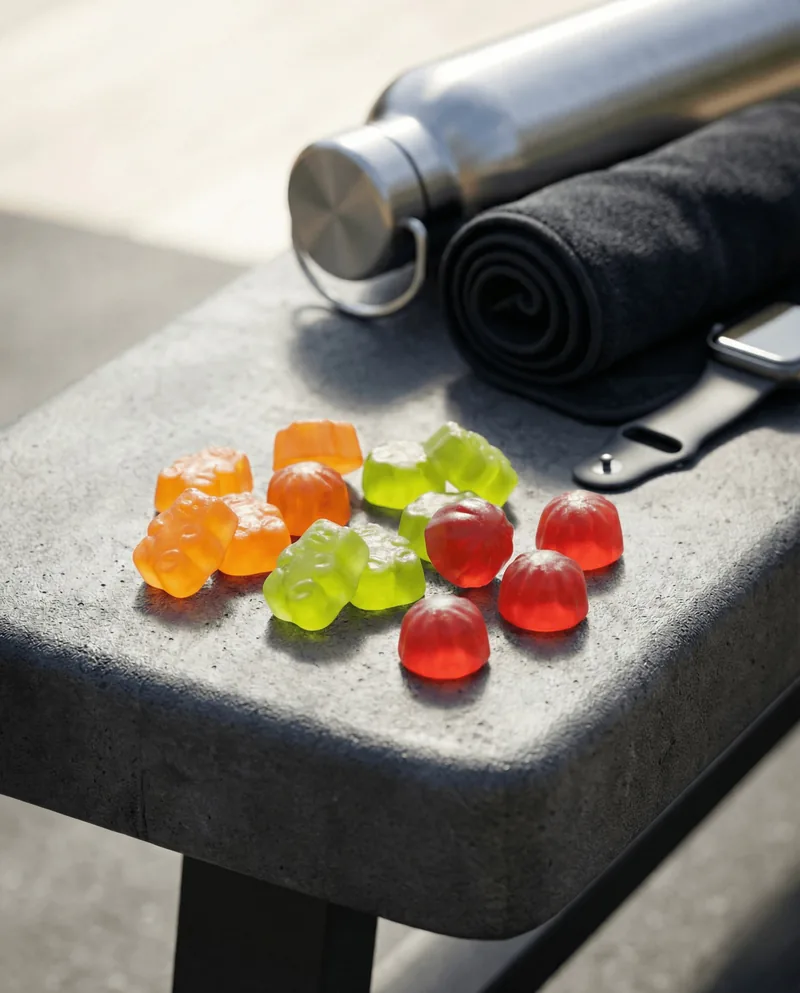
This guide equips brand owners with the knowledge to launch a beauty supplement range through private-label manufacturing. It covers formulation strategy, packaging personalisation via the Make it Yours programme, and the step-by-step journey from brief to production. The brand owner remains responsible for final claims, on-pack labelling and market compliance in each destination market. Whether you are exploring gummy or sachet formats, this resource helps you prepare a compliant, market-ready product. Start by reviewing the gummy catalogue or order samples to see quality firsthand.
What is a beauty supplement private-label?
A beauty supplement private-label allows brand owners to sell supplements under their own brand without developing formulations from scratch. The manufacturer produces the product to a pre-existing formula, which the brand owner can customise through packaging, branding, and optional ingredient tweaks via the Make it Yours programme. This model reduces R&D time and regulatory burden, enabling faster market entry. For beauty supplements, common formats include gummies and sachets, which appeal to consumers seeking convenient, ingestible beauty solutions. Brand owners retain full responsibility for final claims and labelling compliance in their target markets.
Preparing your beauty supplement brief
A clear brief accelerates the project. Start by defining your target market and consumer profile—this influences format choice, ingredient selection, and regulatory pathway. Specify desired benefits (e.g., skin hydration, hair strength) without making medical claims; focus on ingredient function. Outline packaging preferences: size, material, and design elements. The manufacturer uses this brief to recommend suitable base formulations from the private-label catalogue. For example, if you target the EU market, review the EU regulatory framework to ensure compliance. Include any required certifications or sustainability goals.
How Make it Yours personalisation works
Make it Yours is DAT Supply's programme that lets brand owners customise private-label products beyond standard branding. You can adjust flavour, colour, sweetness level, and even select active ingredient variants within regulatory limits. The process begins with a consultation to identify which parameters are modifiable for your chosen base product. For instance, a beauty gummy can be tailored with different fruit extracts or vitamin blends. The manufacturer provides a technical feasibility assessment and a revised specification sheet. This personalisation does not require full R&D investment, keeping costs and lead times lower than bespoke development. Lead time is confirmed on the quote.
From brief to samples and production
After finalising the brief and personalisation options, the manufacturer produces a sample batch for approval. Samples are shipped for sensory evaluation, stability checks, and label review. Brand owners should test the sample against their quality criteria and verify that on-pack claims are substantiated. Once approved, the manufacturer proceeds to full production. The timeline depends on formulation complexity, packaging availability, and order volume. To understand typical timelines, review MOQ and lead times. After production, the manufacturer handles quality control and logistics, delivering finished goods to your warehouse or fulfilment partner.
Regulatory considerations for beauty supplements
Beauty supplements are regulated as food supplements in most markets, meaning they must comply with local food safety and labelling laws. The brand owner is responsible for ensuring that all claims (e.g., 'supports skin elasticity') are permitted in the destination market and supported by evidence. The manufacturer provides a documentation route including certificates of analysis, formulation data, and allergen information. However, the brand owner must conduct a final compliance review. For markets like the EU, novel ingredients require pre-authorisation. Always consult a regulatory specialist to avoid missteps.
Building your beauty supplement range
A cohesive range can include multiple products targeting different beauty concerns—skin, hair, nails—or a single hero product with variant flavours. Start with one or two stock-keeping units (SKUs) to test the market, then expand. The manufacturer's private-label catalogue offers pre-validated formulations that can be adapted via Make it Yours. For example, you could launch a collagen gummy and a biotin sachet. Browse the private label catalogue to see available options. Once you have selected your products, [Start order](https://portal.dat.supply/register) to begin the process.
Ingredient, dosage or concept changes beyond the catalogue are scoped as Custom Product R&D, with feasibility, production minimum and timeline confirmed per project.
The category hub this guide leads into
This guide sits upstream of DAT Supply's Beauty & Skin category hub, the page built for beauty brands and subscription boxes assembling a hair, skin and nail-led range rather than sourcing a single SKU. The hub carries the reviewed catalogue formulas referenced throughout this guide, plus a beauty-specific FAQ on claims review and ordering that goes deeper than the general points covered here.
For brands specifically targeting the German market, DAT Supply also maintains a dedicated Germany beauty-category page, pairing the same catalogue with market-specific framing — worth a look if Germany is a launch-priority market rather than a secondary one.
What a first beauty range typically pairs together
Beyond the single-SKU-first advice already given above, brands building a beauty range from scratch commonly pair a gummy hero product with a second format rather than launching two gummy SKUs — the published catalogue already reflects that pattern, with collagen and glow-focused concepts each available as a gummy and as a second format (sachet or functional jelly).
Pairing formats this way spreads a range across more than one shelf or subscription-box use case without doubling the review and documentation work: one project brief can cover both SKUs, with one sample-review checkpoint before either goes to production.
A wording note beyond the general claims section above
The claims section above correctly flags that appearance-related wording must be checked against the destination market. Worth adding: DAT Supply's own catalogue documentation for beauty SKUs is written in ingredient-function and formulation language rather than outcome language, for exactly this reason — a pattern worth mirroring in a brand's own early positioning drafts, before the formal claims review stage, so fewer claims need reworking later.
This isn't a substitute for the market-specific review the guide above already describes — it's a starting discipline that tends to reduce how much on-pack language needs revisiting once that review happens.
Sequencing a range brief across more than one SKU
When a brief covers two or more beauty SKUs at once, it helps to sequence the review rather than submit every SKU as one undifferentiated brief: state which concept is the lead SKU and which is the companion, since the lead SKU typically drives the packaging and brand-identity decisions the companion format then follows.
This sequencing also makes the sample-approval stage more useful — reviewing the lead SKU first surfaces formulation or claims questions that would otherwise need re-checking on the companion SKU anyway, so raising them once, against the lead concept, avoids resolving the same question twice across a two-SKU range.
It's also the point at which shared packaging language across the range is worth deciding — whether the lead and companion SKU share a visual system or read as distinct sub-lines — since that decision affects artwork review timing on both SKUs and is easier to set once, at the brief stage, than to reconcile after each SKU's artwork has already been reviewed separately. Stating that decision in the brief also gives the account team a clearer basis for sequencing the two artwork reviews rather than running them independently, which tends to shorten how long the pair spends in back-and-forth review overall, start to finish.
Frequently asked questions — The beauty supplement private-label guide
Does the Beauty & Skin category hub cover more than what is in this guide?
Yes — the hub carries the live reviewed-formula catalogue and a beauty-specific FAQ on claims and ordering, in addition to the brief-to-production process covered in this guide.
Is there a Germany-specific beauty resource?
Yes — DAT Supply maintains a dedicated Germany beauty-category page pairing the catalogue with market-specific framing, useful if Germany is a priority launch market.
Should a beauty range launch with more than one format from the start?
Not necessarily, but pairing a hero gummy with a second format is a common pattern in the published catalogue, and can be reviewed in a single project brief rather than as two separate projects.
Related resources
- Resource
A supplement order-minimum and cost planning guide
Plan your supplement launch with this guide on order minimums and costs for private-label brand owners. Learn about Make it Yours, samples,
Read more → - Resource
Apple cider vinegar supplements: a private-label overview
Apple cider vinegar supplements: a private-label overview — a practical private-label guide for supplement brand owners. Plan formats, categ
Read more → - Resource
Ashwagandha supplements: a private-label overview
Ashwagandha supplements: a private-label overview — a practical private-label guide for supplement brand owners. Plan formats, categories an
Read more → - Resource
Biotin supplements: a private-label overview
Biotin supplements: a private-label overview — a practical private-label guide for supplement brand owners. Plan formats, categories and doc
Read more → - Resource
Collagen supplements: a private-label overview
Collagen supplements: a private-label overview — a practical private-label guide for supplement brand owners. Plan formats, categories and d
Read more → - Resource
Creatine supplements: a private-label overview
Creatine supplements: a private-label overview — a practical private-label guide for supplement brand owners. Plan formats, categories and d
Read more → - Resource
Doypack supplement packaging explained
Doypack supplement packaging explained — a practical private-label guide for supplement brand owners. Plan formats, categories and documenta
Read more → - Resource
Electrolyte supplements: a private-label overview
Electrolyte supplements: a private-label overview — a practical private-label guide for supplement brand owners. Plan formats, categories an
Read more →
Where to next?
Browse the reviewed catalogue, request samples, or start an order when you're ready — the DAT Supply portal routes your brief through the right review step.