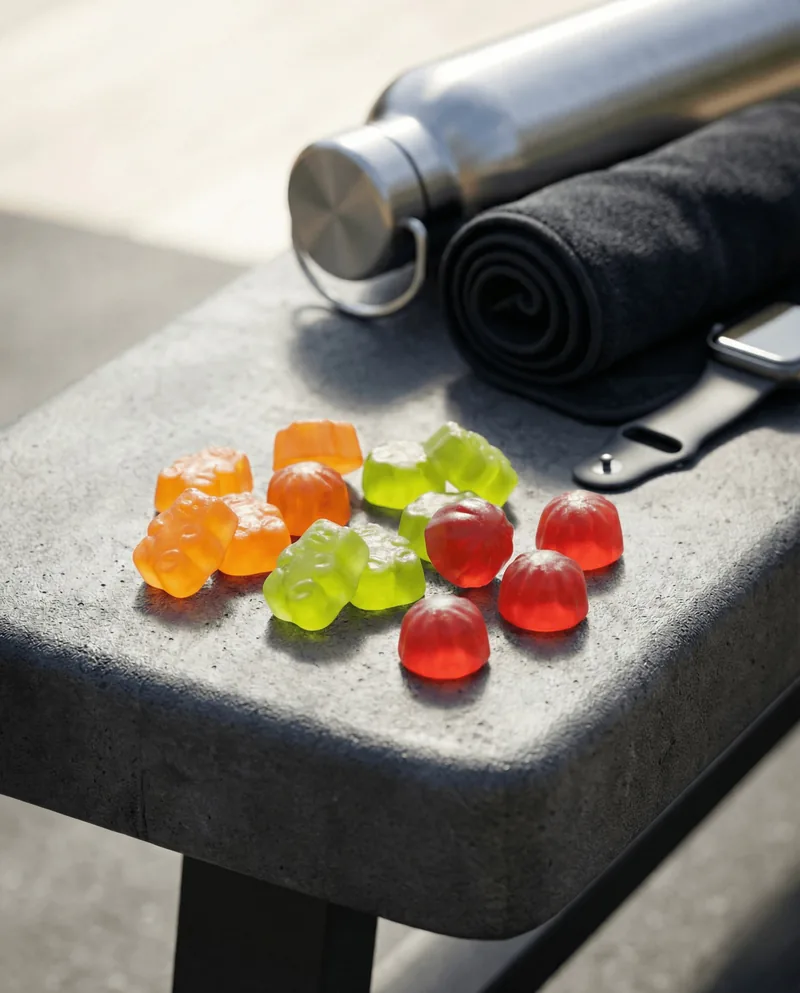
Soft chews offer a convenient and palatable alternative to traditional capsules or tablets, making them a popular choice for brands targeting consumers who prefer a chewable format. This guide provides an overview of private-label soft chew manufacturing, focusing on how brand owners can leverage this format through DAT Supply's Make it Yours personalisation process. It outlines key considerations for product development, from selecting active ingredients to navigating the production journey, while emphasising that final product claims and compliance remain the brand owner's responsibility.
What this format is and who it suits
Soft chews are chewable dietary supplements with a gummy-like texture, typically made from a base of sugars, starches, and gelatin or pectin. They are ideal for brands targeting consumers who have difficulty swallowing pills, such as children or older adults, or those seeking a more enjoyable supplement experience. The format also suits brands looking to differentiate their product line with a novel delivery system that can incorporate various active ingredients.
Choosing actives and a category fit
Selecting the right active ingredients is crucial for a successful soft chew product. Common categories include multivitamins, minerals, probiotics, and herbal extracts. Brand owners should consider their target audience's needs and market trends when choosing actives. It's important to ensure that the chosen ingredients are compatible with the soft chew manufacturing process, as some actives may be sensitive to heat or pH changes. DAT Supply can advise on formulation feasibility during the initial consultation.
Personalisation: Make it Yours
DAT Supply's Make it Yours programme allows brand owners to customise their soft chews without starting from scratch. This includes selecting from a range of base formulas, adjusting flavour profiles, choosing colour options, and specifying packaging designs. The programme is designed to streamline the development process while still offering meaningful differentiation. Brand owners can work with DAT Supply's team to tailor the product to their brand identity and target market.
Documentation and responsibilities
Brand owners are responsible for providing accurate product specifications, including intended use, target market, and any required regulatory documentation. DAT Supply provides manufacturing documentation such as certificates of analysis for raw materials and finished products, but brand owners must ensure final labels and claims comply with local regulations. It is the brand owner's duty to verify that the product meets all legal requirements before market launch.
From samples to production
The process begins with a project brief, followed by formulation development and sample creation. Once samples are approved, the project moves to scale-up and commercial production. DAT Supply manages the manufacturing process, including quality control checks. Brand owners should be prepared for iterative feedback during sampling to achieve the desired taste, texture, and appearance. Production timelines are discussed on a project basis.
How this format fits a multi-format range
Soft chews can complement a brand's existing product line by offering a different delivery format that appeals to a broader audience. For brands already offering capsules, tablets, or powders, adding soft chews can fill a gap in the market for a more consumer-friendly option. This format also allows for cross-promotion and bundling opportunities within a multi-format range, helping to build brand loyalty and increase shelf presence.
Ingredient, dosage or concept changes beyond the catalogue are scoped as Custom Product R&D, with feasibility, production minimum and timeline confirmed per project.
A different base than a gummy
A soft chew and a gummy share a category on the page but not a base. Soft chews use a chewable matrix of humectants, binders and fats — vegetable glycerin, brown rice syrup, plant-based fats, gum arabic and oats — rather than DAT's pectin gel matrix. Protein-led chews layer in whey, plant protein or collagen peptides on top of that base.
The trade this base makes is payload and protein content against the pectin platform's broader appeal and lighter texture: the chew base carries a denser active or protein load, with texture tuned in brief review to sit between a chewy candy and a clinical bar.
That base difference is also why a soft chew and a gummy aren't simple substitutes for each other in a brief — swapping formats mid-project usually means restarting formulation review rather than adjusting an existing spec, since the two platforms don't share tooling or process.
Packaging: doypack, jar or wrapped piece
The base guide doesn't address packaging at all — worth closing that gap directly. Soft chews route through one of three lanes: doypack with a high-barrier film for daily multi-piece ranges, a jar for a premium, treatment-style shelf presence, or a single-piece wrap for travel and trial SKUs.
Moisture barrier is the deciding factor across all three, reviewed against the specific chew matrix and the target channel rather than chosen by default.
Personalisation and custom, not an off-the-shelf catalogue SKU
Worth stating plainly: soft chews typically route through personalisation on a reviewed matrix, or through full custom development, rather than a ready catalogue pick. Most soft-chew launches need at least flavour, texture or active-load tuning before spec lock, so a straight private-label route is reviewed case by case rather than being the default entry point it is for the gummy or powder-sachet lanes.
For a brand that wants a faster, off-the-shelf starting point instead, gummies and powder sachets are the two lanes that carry a ready private-label route today — worth weighing against a soft chew before committing to the longer feasibility-first path. Functional jellies sit closer to the soft chew here: a spoonable alternative, but reviewed through the same personalisation-or-custom route rather than picked off a catalogue.
None of this makes a soft chew a weaker choice — protein-forward and high-active-load concepts that don't suit a pectin gummy or a sachet fill often belong here specifically, and the feasibility-first route exists because the format earns its place on payload and texture, not convenience.
Where a soft chew sits regulatorily
Beyond a general nod to "applicable regulations," the actual placement question is where the chew sits between two categories: under EU Directive 2002/46/EC or UK retained law where the active stack and serving size meet supplement-category criteria, or closer to the general food category where a chew is high enough in protein — that placement is reviewed per project rather than assumed from the format.
US launches typically route through DSHEA with structure-function claims and a supplement facts panel, following the same food-versus-supplement judgement call for protein-forward chews.
Texture sits on a tunable spectrum
The soft-chew base isn't a single fixed texture — brief review tunes hardness, mouthfeel and after-feel against the brand's promise, landing anywhere between a chewy candy and a denser, clinical-bar-style bite depending on the active and protein load carried.
Standard finish options layer on top of that base: enrobing, dusting, and particulate inclusions such as seeds, freeze-dried fruit or cacao nibs, plus shape variation within the available tooling — a differentiation menu the base guide doesn't mention at all.
Frequently asked questions — Private-label soft chew manufacturing: a brand guide
Is a private-label soft-chew catalogue SKU available today?
Not as a ready catalogue pick. Soft chews route through personalisation on a reviewed matrix or full custom development, with feasibility reviewed per project. Gummies and powder sachets are the two lanes that carry a ready private-label route today; functional jellies, like soft chews, are reviewed through personalisation or custom instead.
How does a soft chew's base differ from a gummy's?
A soft chew uses a humectant, binder and fat base — vegetable glycerin, brown rice syrup, plant-based fats, gum arabic and oats — instead of DAT's pectin gel matrix. Protein-led chews add whey, plant protein or collagen peptides.
What packaging options exist for soft chews?
Doypack with a high-barrier film, a jar for premium shelf presence, or a single-piece wrap for travel and trial SKUs — chosen against moisture-barrier need and the target channel.
Can a high-protein soft chew be classed as a food rather than a supplement?
Yes, depending on protein content and serving size — a high-protein chew can sit closer to the general food category, and that placement is reviewed per project.
Related resources
- Resource
A supplement order-minimum and cost planning guide
Plan your supplement launch with this guide on order minimums and costs for private-label brand owners. Learn about Make it Yours, samples,
Read more → - Resource
Apple cider vinegar supplements: a private-label overview
Apple cider vinegar supplements: a private-label overview — a practical private-label guide for supplement brand owners. Plan formats, categ
Read more → - Resource
Ashwagandha supplements: a private-label overview
Ashwagandha supplements: a private-label overview — a practical private-label guide for supplement brand owners. Plan formats, categories an
Read more → - Resource
Biotin supplements: a private-label overview
Biotin supplements: a private-label overview — a practical private-label guide for supplement brand owners. Plan formats, categories and doc
Read more → - Resource
Collagen supplements: a private-label overview
Collagen supplements: a private-label overview — a practical private-label guide for supplement brand owners. Plan formats, categories and d
Read more → - Resource
Creatine supplements: a private-label overview
Creatine supplements: a private-label overview — a practical private-label guide for supplement brand owners. Plan formats, categories and d
Read more → - Resource
Doypack supplement packaging explained
Doypack supplement packaging explained — a practical private-label guide for supplement brand owners. Plan formats, categories and documenta
Read more → - Resource
Electrolyte supplements: a private-label overview
Electrolyte supplements: a private-label overview — a practical private-label guide for supplement brand owners. Plan formats, categories an
Read more →
Where to next?
Browse the reviewed catalogue, request samples, or start an order when you're ready — the DAT Supply portal routes your brief through the right review step.