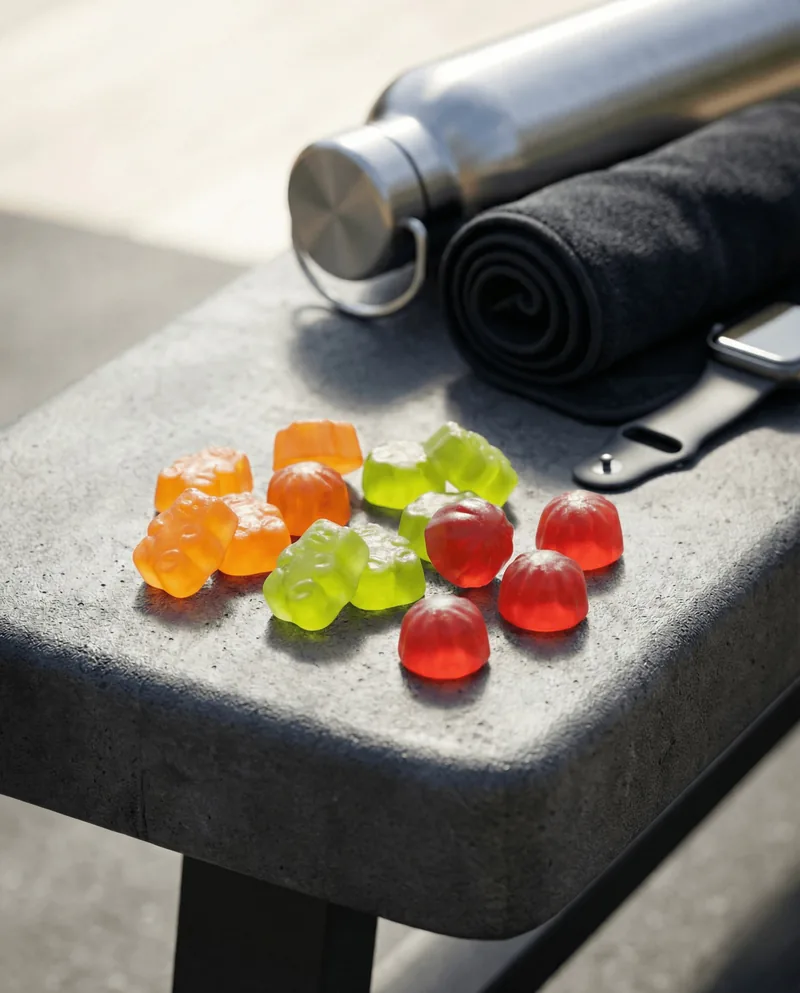
When launching private-label gummies, packaging is a critical component that communicates your brand identity and meets regulatory requirements. This section details the packaging options available through DAT Supply's Make it Yours program, covering bottle types, labeling, and customization levels. Understanding these choices helps you align packaging with your brand strategy while ensuring compliance with market-specific rules. The following overview explains what to prepare, how personalization works, and the steps from brief to production.
What to know first
Before selecting packaging, confirm your target market's labeling regulations, as requirements vary by region. DAT Supply offers standard bottle sizes and materials for gummies, including PET and HDPE options. You can choose from stock molds or request custom shapes, though tooling lead times apply. All packaging must be compatible with the gummy formulation to ensure stability and shelf life. Your brand name, net weight, ingredient list, and any required warnings must appear on the label. DAT Supply provides label templates to simplify compliance.
Key considerations
Key factors include bottle size (e.g., 30, 60, or 120 count), closure type (child-resistant or standard), and labeling area. Custom printing on bottles may require minimum order quantities. Consider the gummy's sensitivity to light and moisture; opaque bottles or desiccant packets can help. Also, plan for secondary packaging like cartons or display boxes if retail placement is intended. Cost per unit decreases with larger runs, so balance inventory needs with cash flow. DAT Supply's team can advise on cost-effective options.
Personalisation and packaging
Under the Make it Yours program, you can personalize packaging with your logo, brand colors, and artwork. Options include full-color shrink sleeves, pressure-sensitive labels, or direct printing. You may also choose bottle shape, cap color, and insert materials like cotton or desiccant. For a unique look, custom bottle molds are available but require a one-time tooling investment. DAT Supply provides digital proofs for approval before production. All personalization is subject to minimum order quantities and lead times.
Documentation scope
DAT Supply provides documentation to support your packaging process, including bottle specifications, label templates, and artwork guidelines. You will receive a packaging brief that outlines dimensions, materials, and tolerances. For custom molds, technical drawings are shared for approval. While DAT Supply does not create final labels, it offers a checklist of required elements per target market. All documentation is for reference; you are responsible for final label compliance and registration.
How to start with DAT Supply
To begin, contact DAT Supply with your desired gummy formulation, target market, and packaging preferences. A project manager will guide you through the Make it Yours process, from selecting base packaging to finalizing artwork. You can request samples of empty bottles and labels to evaluate. Once approved, production proceeds with a deposit and agreed timeline. Start by browsing private label options or ordering samples to see packaging quality firsthand.
Ingredient, dosage or concept changes beyond the catalogue are scoped as Custom Product R&D, with feasibility, production minimum and timeline confirmed per project.
Three packaging lanes, one gummy formulation
Beyond the bottle options already covered, the same reviewed gummy formulation ships through two further packaging lanes: doypack and sachet. The formula doesn't change between them — only the container and the channel it's built for.
Doypack is a stand-up pouch with a resealable zip, built for a DTC unboxing moment and a lower secondary-packaging footprint. Sachet is a single-serve pouch aimed at a daily-ritual or travel SKU rather than a multi-serve bottle.
PET bottle stays the canonical container for the supplement shelf, but it isn't a mandatory first step — a brand's first SKU can launch in doypack just as readily, and the choice is treated as a channel decision from the outset rather than a later upgrade path.
Matching packaging to channel
A retail or pharmacy-facing range tends toward the bottle: a familiar cap, a clear nutrition table and shelf-ready stacking. A subscription-first DTC brand tends toward doypack, where the resealable zip and unboxing read carry more weight than shelf stacking. A trial, sampling or travel SKU tends toward sachet.
The useful part for a brand brief: a reviewed formulation concept can move across PET bottle, doypack or sachet packaging without a reformulation — DAT confirms the right fit for the channel during the brief rather than the brand locking a packaging decision before the formula is even reviewed.
Sustainability and compliance features across formats
Recyclable mono-material options, tamper-evident seals and on-pack QR or batch codes are reviewed features across all three packaging lanes, not a bottle-only extra — a brand weighing doypack for its DTC read doesn't have to trade away the recyclability story.
Artwork is reviewed against the target-market framework before production in all three lanes, and the brand owner remains the food business operator on pack whichever container is chosen — a bottle label, a doypack pouch and a sachet film simply carry that same required content differently.
The formulation the packaging wraps
Every packaging choice here wraps the same base: DAT's gummy platform is pectin-first across PET bottle, doypack and sachet alike, with gelatin out of scope entirely. Finish options — sugar-sanding, oil polish, sour-coating and shape variation — sit on top of that base independently of which container the brand ends up choosing.
That separation matters for sequencing a brief: flavour, colour and finish decisions can be locked before the packaging lane is finalised, since the formulation review and the packaging review run as two distinct steps rather than one combined choice.
A brand weighing packaging first and formulation second has that order backwards in practice — the pectin base, actives and finish are reviewed before packaging is locked, precisely because the same formula needs to be portable across all three container types without a rework.
Sequencing formulation and packaging decisions
Because the packaging lane and the formulation are reviewed as two separate steps, a brand doesn't need every packaging detail settled before the first sample request goes in. Flavour, colour and finish can be locked against the pectin base while bottle-versus-doypack-versus-sachet is still an open channel question.
That sequencing matters most for a brand still deciding on retail versus DTC positioning — the formula review can proceed in parallel with that commercial decision rather than waiting on it, which shortens the overall path from brief to sample.
Frequently asked questions — Packaging options for private-label gummies
Can the same gummy formulation ship in more than one packaging type?
Yes — a reviewed formulation concept can move across PET bottle, doypack or sachet packaging. DAT confirms the right fit for the channel during the brief; the formula itself doesn't change.
Does DAT use a gelatin or pectin base for gummies?
Pectin. The platform is pectin-first across PET bottle, doypack and sachet formats, sourced from citrus or apple. Gelatin is out of scope.
Which packaging lane suits a subscription DTC brand?
Doypack — the resealable zip and unboxing moment read DTC-first, and it carries a lower secondary-packaging footprint than a bottle-and-carton combination.
Related resources
- Resource
A supplement order-minimum and cost planning guide
Plan your supplement launch with this guide on order minimums and costs for private-label brand owners. Learn about Make it Yours, samples,
Read more → - Resource
Apple cider vinegar supplements: a private-label overview
Apple cider vinegar supplements: a private-label overview — a practical private-label guide for supplement brand owners. Plan formats, categ
Read more → - Resource
Ashwagandha supplements: a private-label overview
Ashwagandha supplements: a private-label overview — a practical private-label guide for supplement brand owners. Plan formats, categories an
Read more → - Resource
Biotin supplements: a private-label overview
Biotin supplements: a private-label overview — a practical private-label guide for supplement brand owners. Plan formats, categories and doc
Read more → - Resource
Collagen supplements: a private-label overview
Collagen supplements: a private-label overview — a practical private-label guide for supplement brand owners. Plan formats, categories and d
Read more → - Resource
Creatine supplements: a private-label overview
Creatine supplements: a private-label overview — a practical private-label guide for supplement brand owners. Plan formats, categories and d
Read more → - Resource
Doypack supplement packaging explained
Doypack supplement packaging explained — a practical private-label guide for supplement brand owners. Plan formats, categories and documenta
Read more → - Resource
Electrolyte supplements: a private-label overview
Electrolyte supplements: a private-label overview — a practical private-label guide for supplement brand owners. Plan formats, categories an
Read more →
Where to next?
Browse the reviewed catalogue, request samples, or start an order when you're ready — the DAT Supply portal routes your brief through the right review step.